

Guest Post: 5 Tips to Save Money When Buying Produce
The following is a guest post by Yolanda.  Yolanda blogs at Cuponeando, a blog dedicated to highlighting coupons and deals in the Spanish language. Enjoy!

One of the true and proven track records when saving money on groceries is to buy fruits and vegetables that are in season! Why? Because this is the best time to get them at great prices from your local grocery store or farmer’s market.

Here is some of the produce that you can peaks in Fall: Acorn Squash, Apples, Broccoli, Brussels Sprouts, Butter Lettuce, Butternut Squash, Cauliflower, Chayote Squash, Cranberries, Garlic, Ginger, Grapes, Guava, Huckleberries, Jalapeno Peppers, Mushrooms, Passion Fruit, Pear, Pineapple, Pomegranate, Pumpkin, Sweet Potatoes, Swiss Chard, Turnips and Winter Squash.

My top 5 tips to save money when buying fruits and vegetables in season are:

  • Check the tags at the grocery stores. Most grocery stores will display where the produce comes from. Have you seen those “Imported from Chile” signs? Buy locally grown produce and save $$.
  • Check with the produce manager at your local grocery store to find out when they start their markdowns. Most of the time you can get perfectly good produce at much lower prices!
  • If you can spare a few additional minutes in the kitchen, wash your own lettuce, peel carrots and dice your veggies. This can save you 30% – 60% for just 5 minutes of work.
  • When buying prepackaged bags of produce, weigh them! Not all bags weigh the same. Also check that there are no bruised or spoiled spots in the bag.
  • To get maximum savings, take advantage when your local grocery store has these on sale and stock up, yes stock up! You can freeze the produce or prepare a dish in advanced and freeze it for those busy nights when you don’t feel like cooking.

As with coupons, keep in mind though, buy what you’ll use or freeze because otherwise you are literally throwing away money.

I hope you enjoyed this post. Please stop over by Yolanda’s blog Cuponeando. If you have been looking for a blog that covers deals in Spanish please consider subscribing to her blog.

Guest post: Create a Clothing Inventory

Image Credit: SmallNotebook

Image Credit: SmallNotebook.org

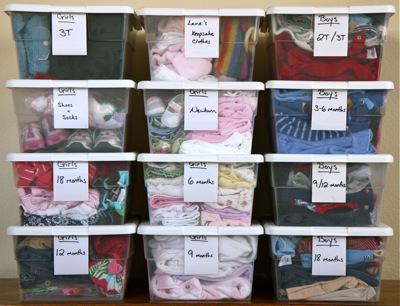
The following is a guest post by Tiffany over at Songbirdtiff.  Hand me downs, clearance, garage sale and thrift store shopping are all wonderful ways to cut back on clothing expenses.  But I am sure you have experienced the common pitfall of having too many summer shorts or not enough winter sweaters for your family.  A clothing inventory is a great way to keep track of what we have on hand to avoid overbuying items we already have on hand.  Enjoy!

We all know that shopping clearance racks and thrift stores can help save money on the family wardrobe, but there is one way that we can save money without leaving our homes: by creating a clothing inventory.

Why do a clothing inventory?

1. The change of seasons is a great time to weed out items that are worn out and in need to be replaced.

2. It’s good to know what you have, before you buy a replacement. If your memory is anything like mine, you have no idea what you have from last winter.

3. This gives you time to make needed repairs to items, such as replacing zippers and buttons.

4. If you shop year round for great deals, it’s likely you don’t remember what you bought last spring. I never really know what I have to start off my winter wardrobe until I do a clothing inventory.

How to Create a Clothing Inventory:

1. Put away all your summer clothes.  I pull all my summer clothes off hangers and fold them neatly to put in vacuum storage bags and under bed containers.

2. Bring on the winter clothes.  Just dump those containers and vacuum bags of winter clothes all out on the bed.

3. Organize.   I like to put my clothing in piles of like-items. I organize them according to each category on my Inventory Sheet: sweaters, jeans, dresses, etc.  Check out the Inventory Sheet I have created here.

4. Write it all down.  I count how many items I have of each item and write it down under that category. I leave some room for notes.

5. Creating a shopping list.  In doing my inventory, I noticed that my black long sleeve t-shirt is worn out and needs to be replaced. I wrote that down in the left column. Since it’s still very early in the season, I can wait for a good sale to come around in the next month or so, saving me from running out and buying one at full price when I’m ready to wear it.

Useful Tips to Make it Easy for You:

  • Keep two baskets available, one for donations and another to discard worn out items. Consider recycling as many old clothes as possible into cleaning rags.
  • When hanging clothes, turn your hangers backwards. If, in the spring, the hanger is still backwards that item hasn’t been worn all winter and should be donated.
Tiffany, is the author of the blog Songbirdtiff.  She loves to blog about her  thrift store finds, yard sales cores and her coupon shopping adventures.  Check out more of her frugal tips about Frugal Fall decorating.

Guest Post: Coupon Organization

couponsclipped

The following is a guest post by Amy who blogs at the Original Coupon Coach on alternatives and tips on coupon organization. Enjoy!

People regularly ask me how they should organize their coupons. This question is a difficult one because there is no one best way to organize coupons. This is a personal decision that only you can make. The answer will depend on your personality, organizational process, and shopping style.

What are the options for organizing my coupons?

I have seen many, many clever coupon organization systems over the years. The most popular include:

o Envelopes: I see a lot of people using envelopes for their coupons. This is a nice, cheap option if you have only a handful of coupons. If you like this system and have more than will fit into one envelope, you can try using a different envelope for each category of coupons.
o The Accordion File: The accordion file is a compact organizer with built in divided sections. These usually come with a snap or band closure. This is a great organizer to start with if you have a small to medium amount of coupons.
o The Index Card Box: When your accordion file is overflowing, you can graduate to the index card box. This system uses an index card box with index dividers for the categories. The coupons are kept freely between the dividers.
o The Binder System: The binder system is very popular. This system uses a 3-ring binder with clear baseball card or photo pages. Slide the coupons into each slot in the pages and viola! Use divider pages to separate each category. This option is great because you can see the coupons at a glance and they’re expandable. The zippered type of binder works well to hold everything neatly inside.
o The Briefcase: I have only ever seen this type of system once, but it’s so incredible I had to include it. This person uses the bottom of the briefcase for the coupons, using index dividers. The top of the briefcase is used for coupon supplies such as store flyers, a stapler, scissors, a calculator, pens, etc. This briefcase topped the scales at 17 lbs, so it is not for the casual couponer!

Which system you use will be driven completely by personal preference. You may try one system and decide after a while that it’s simply not working for you. Go ahead, try a different approach. It’s all about finding what works for you.

So now you have your system. What next?

How should I organize the coupons?

Like the system, choosing the organizational method will be solely based on personal preference. There are tons of variations on organizing coupons. Here are some ideas:

o By Category: This is the method I personally use. Each section of my organizer is a different category (in alphabetical order). For example, my categories include Baby, Baking, Canned/Bottled, Cereal/Breakfast, Cleaning/Laundry, Dairy, Drinks, Frozen, HBA – Body, HBA – Face, HBA – Fem. Hygiene, HBA – Haircare, HBA Medications, HBA – Oral Hygiene, Meat, Paper Products, Prepared Foods/Pasta, Produce, & Snacks. Within each category are pages labeled with more specific categories. So, within the Paper Products category are pages labeled Tissues, Toilet Paper, Paper Towels, and Plastic/Paper Dinnerware.
o By Aisle: Some people like to categorize by the aisles in their favorite stores. So one section would be Aisle 1 and within that section would be all the coupons for items in that aisle. You can even order the coupons in the order they appear on your store shelves.
o By Brand: This can be done a couple different ways. You can do this alphabetically by brand, separating each section by letter. Or you can separate by category, alphabetizing all brands within that category.

In choosing an organizational method, I always urge people to use a method that suits how they think. Some people organize best by color, while others might feel more organized dealing with numbers. And the best part is, if you try a way that doesn’t work, you can always change it. Make a mental note of what isn’t working for you and tweak it to better suit you and your shopping style.

Should I take all of my coupons to the store with me?

Absolutely! I know there are some people out there who only take those coupons they plan to use (after all, that’s why we plan, right?) But it only took me a few trips without all my coupons to realize I was missing out on unadvertised sales and clearance items. Stores can only fit so many sale items in their flyers. You won’t know about the other sale & clearance items until you get to the store. You don’t want to be without your coupons when you find out that your favorite shampoo is on clearance for $1.00 and your $1/1 coupons for that shampoo are at home!

What about my expired coupons? Do I have to constantly go through my coupons to weed out the expireds?

I may be in the minority on this, but I never spend extra time weeding out expired coupons. I simply don’t find it necessary. Instead, I take them out when I see them. What I mean by this is that when I am going through my coupons while planning my trips, I may see some that are expired. I take them out and put them aside to send to military families (they can use expired coupons). While I’m at the store looking through my cereal coupons to see what coupons I have for an unadvertised sale and I see some expireds, I take them out and store them separately. I have not found any reason to diligently go through and weed them out each week or month. It’s just not necessary!

Now you’re ready to create your personal coupon system. Remember, the most important thing about organizing your coupons is making sure it works for you.

You can find more of Amy’s  offer ideas, tips, resources, and money-saving advice on her blog The Original Coach.  She also offers classes, personal calls, and guest bloggers.

Guest Post: Five Mistakes I Made as a Newbie Couponer

Today I have a very lovely post by Angela Russell from the Coupon Project that I think will be useful to many of my reader, new to couponing or not. Enjoy!

When I first realized I could be saving a lot of money by matching coupons up with store sales and promotions, I got excited. I mean REALLY excited. I sent countless emails to friends with my finds. I “scouted out” the local Kmart a couple weeks before the rumored double coupon event to strategize. I’d fall asleep piecing together Walgreens scenarios in my head. I began seeing barcodes everywhere I looked.

In all the excitement of finding the good deals, I’ve learned a few lessons along the way. If you’re new to couponing (or even if you aren’t), please learn from my mistakes…and don’t repeat them! After doing some soul-searching, I’ve come up with a list of five mistakes I could have avoided. So here goes:

1. Trying to do EVERY deal. When my eyes were open to the world of couponing, I couldn’t believe ALL the deals I was finding…diapers, oatmeal, ground beef, canned vegetables, razors, soap, shampoo…and for some reason I felt the need to get every last one. It could be that I’m a bit of a perfectionist, or my mom would likely argue that it’s because I’m a firstborn, but whatever the reason, this shopping approach is completely unnecessary. Don’t kill yourself trying to make 18 shopping trips in a week. Deals come, deals go, other deals come. If you miss a deal, there will be others. Focus on a few that make sense for your family that week. Let the others go.

2. Feeling the need to use high value coupons – even if there is no sale. Remember, the key is to manage your out-of-pocket expenses on items your family needs and uses. When I first started clipping coupons, my heart would skip a beat when I’d find a $4 off coupon for some new-fangled room air freshener product. I MUST have that! Then I’d begin the desperate search of trying to find a sale to match it with. Sometimes I’d be successful. Other times, not so much. Bottom line: a $4 off coupon is still not a good deal if the item is $17.99 and you have no intention of using it. I’ve since learned to relax and let coupons expire if I can’t find a sale. Even good $4 off coupons.

3. Not paying attention to deadlines. So in April – the final month of the Walgreens’ Easy Saver Rebate Program, I decided to wait until the last minute to enter a rebate receipt. Guess what? I missed the deadline! And I had $10 worth of rebates. What’s more, because I didn’t submit it, the system automatically processed my rebates and sent me a check – instead of letting me select the Gift Card option which would have yielded me an additional 10%. Watch out for deadlines, keep your receipts and coupons organized. You don’t want to lose out. I still shudder to think how far $10 at Walgreens could’ve gotten me this month….!

4. Not paying attention to expiration dates. Guess what? Non-perishables are actually perishable! So when you purchase enough cans of tomato soup to last you two years, you better make sure those cans of soup will actually be good two years from now. I now check the expiration dates on everything from milk to cough drops to cans of soda. Especially pay attention if there is a REALLY good sale going on a certain item. I can think of a recent instance where a store (which shall remain nameless) was offering extremely high value coupons for a certain type of candy. When I visited the store, almost every last package had expired by more than a month! Yikes.

5. Buying stuff your family won’t use. Sure, it’s great to pick up some stuff for donations to the church pantry or homeless shelter, but remember the main purpose of couponing (at least for most of us) is to save money on your family’s grocery bill each month. So make an effort at coming home with items your family will actually eat, use, and enjoy. I can recall some of my first shopping trips where I’d come home with say, 5 boxes of allergy medicine, 2 bottles of children’s cough syrup, and 3 packages of Tucks Medicated Pads. This is great expect for the fact our family uses none of these items. Again, picking these things up is nice if they are free after coupons and you have a place in mind to donate them to, but it’s even better to focus your energy on things your family needs right now.

Learning how to shop and save wisely will take some trial and error. What I’ve noticed is that I tend to make more mistakes when I fail to see the bigger picture. Don’t get hung up over a coupon or a deal – focus instead on your monthly saving and spending goals or rounding out your pantry. And if you do make a mistake, don’t let it go to waste. Learn from it!

Angela is the author of The Coupon Project, a blog chronicling her real life couponing adventures. Her goal is to encourage and educate other newbie couponers how to enjoy amazing money-saving success through easy-to-follow posts.

Guest post over at Coupon Cravings


Today I am a guest writer at Coupon Cravings.  Erin, founder of Coupon Cravings, is also an Elevenmom.  She let me share my five tips for growing your blog fast and effortlessly.  So please stop by and check out my guest post.

Print Shipping Labels in Paypal

This is a guest post by reader Kelly S.

Occasionally I need a trackable shipping method when I sell something over the internet to a stranger. For example, I sometimes sell books or DVDs on Amazon.com but it does not provide a shipping utility to offer proof of shipment to the buyer. How do I protect myself against a buyer claiming, rightly or wrongly, that a shipment was not received?

Delivery confirmation from the US Postal Service provides what I need, but is available only for pricey services such as Priority Mail at in-person counters or on usps.com. Redroller.com gave me delivery confirmation for a few pennies for awhile, but the site has changed to a monthly subscription plan that costs too much for my small shipping volume. PayPal charges 18 cents for delivery confirmation, but what about my transactions that don’t go through PayPal?

Now I’ve discovered PayPal MultiOrder Shipping. This utility is intended for people who periodically ship a stack of packages to various addresses. But don’t be put off: you can ship your stack of one. Delivery confirmation is included in MultiOrder shipments just as it is for a shipment of any item purchased via PayPal.

Log into PayPal and then click the MultiOrder Shipping link in the Tools menu on the left margin. A large window will open in the background. Click the Close button on the Getting Started window in the foreground. On the large background window, click the File menu and choose the Create New Orders item. The Create New Orders window will open. Expand the Ship to Address item and enter the address. Click on Save and Close to return to the background window. Use that window to specify service type, weight, and shipment date. Then print the address label, complete with delivery confirmation bar code, on plain or adhesive paper and you are done.

Money-Saving Thanksgiving Tips and Beyond

This is a guest post by Tara, the Deal Seeking Mom. She’s a mom to five who runs a very successful blog. Check out her latest post about how you can make money by signing up to be a Logical Media Affiliate. If you enjoyed this post consider subscribing to her blog.

Times are tough this year, and I think it’s safe to say the large majority of us are looking to cut back wherever we possibly can. However, this doesn’t mean that we have to forego a bountiful Thanksgiving dinner. Here are just a few tips that can help you cut costs.

  1. Check out your store ads at home before shopping. Plan your sides according to the best sales, and don’t forget to take into account any coupons that you have. Make a list of everything you need, and check it twice. Don’t forget to check your spices! That’s usually the one thing I miss.
  2. Make a single trip. Gas prices have come down thankfully, but that’s no reason to waste time and energy going back out repeatedly after forgotten items. If you’ve planned your trip carefully, you should have this one covered.
  3. If you’re hosting a lot of family, consider going with a potluck dinner. Trust me

The Yearly Headache: What To Do with Thanksgiving Leftovers

This is a guest post from Frugal Carol from Frugal Finds From your Frugal Friend. Carol is a mom of two who shares everyday her bargain and freebie finds with her readers everyday. If you enjoyed this post consider subscribing to her blog.
I was asked to write about Thanksgiving leftovers. At first, I was not sure that was the best topic for me to write about. After we send leftovers home with all our guests (usually in old margarine and Cool Whip containers so we do not have to worry about getting the good containers back), DH and I pig out all weekend on all the leftovers and rarely have anything left by Monday. Our favorites ways to eat them are…..
fried potato pancakes for breakfast
cold turkey and mayo sandwich for lunch
hot turkey sandwich smothered in gravy with side of leftover filling, veggies and cranberry sauce
cold turkey dipped in mayo for late night snack.
Who am I to tell someone else what to do with Thanksgiving leftovers when all we do is stuff ourselves into a post Thanksgiving coma?
BUT… then I started thinking. Thanksgiving could really serve as one of those days where you cook once, but make a bunch of meals for the upcoming days or weeks. The holiday season is always very hectic here. Having a few already prepared meals in the freezer would make things so much easier and much cheaper than eating out! Here are a few ideas…….
  1. Cut leftover turkey into chunks and mix it with leftover gravy and veggies. Pour it into a pie plate, top it off with leftover potatoes or stuffing, and heat it up for a new style of Shepherd’s Pie.
  2. Turkey salad for lunch the following week
  3. Make a nice big pot of turkey noodle or turkey rice soup and freeze in smaller portions.
  4. Shred and freeze turkey into meal size portions for easy meals like turkey enchiladas or turkey alfredo.
  5. Assemble a few freezer containers with a complete dinner servings for the quick 1 person meal.
  6. Use leftover filling to make stuffed peppers or stuffed pork chops
I also checked to see how long it was safe to use your leftovers and this is what I found:

for that weekend: Within two hours of removing the turkey from the oven, take out the stuffing and carve the meat off the bones. Wrap turkey and stuffing separately, and refrigerate; use both within three days.

for long-term storage: Frozen turkey will last two months; stuffing will last a month (Note from Frugal Carol: YUK!). Cranberry sauce has the longest shelf life of any dish on the Thanksgiving table. Depending on your recipe, it can keep well in the fridge or freezer for months.

Saving the Green on Black Friday

This is a guest post by Lori from Mom’s by Heart. Lori is a Christian mom to five who blogs about money saving tips, menu planning, decorating ideas and many other topics. Check out this post she wrote about Five Grocery Items You Should be Stocking Up Right Now. If you have enjoyed this post consider subscribing to her blog.

The day after Thanksgiving sales bring out the deal seeker in all of us. But fighting the crowds and finding the best bargains can seem daunting at times. With that in mind, I

Don’t Let Entertaining Guests Bust Your Budget

This is a guest post from Jennifer from Getting Ahead. Jennifer is a homeschooling mom to four who provides everyday frugal living tips on her blog. In this post she dispels the myth that being frugal is too time consuming. If you enjoyed this post consider subscribing to her blog.

When Mercedes mentioned she was looking for guest posts I jumped all over it. I love her site Common Sense with Money and am glad to help her while she is visiting family. She mentioned that I should write about having guests over on a budget. While I am no expert, I do have a good bit of experience with it. You see all my family lives out of state, so when they come over it isn